
Introduction
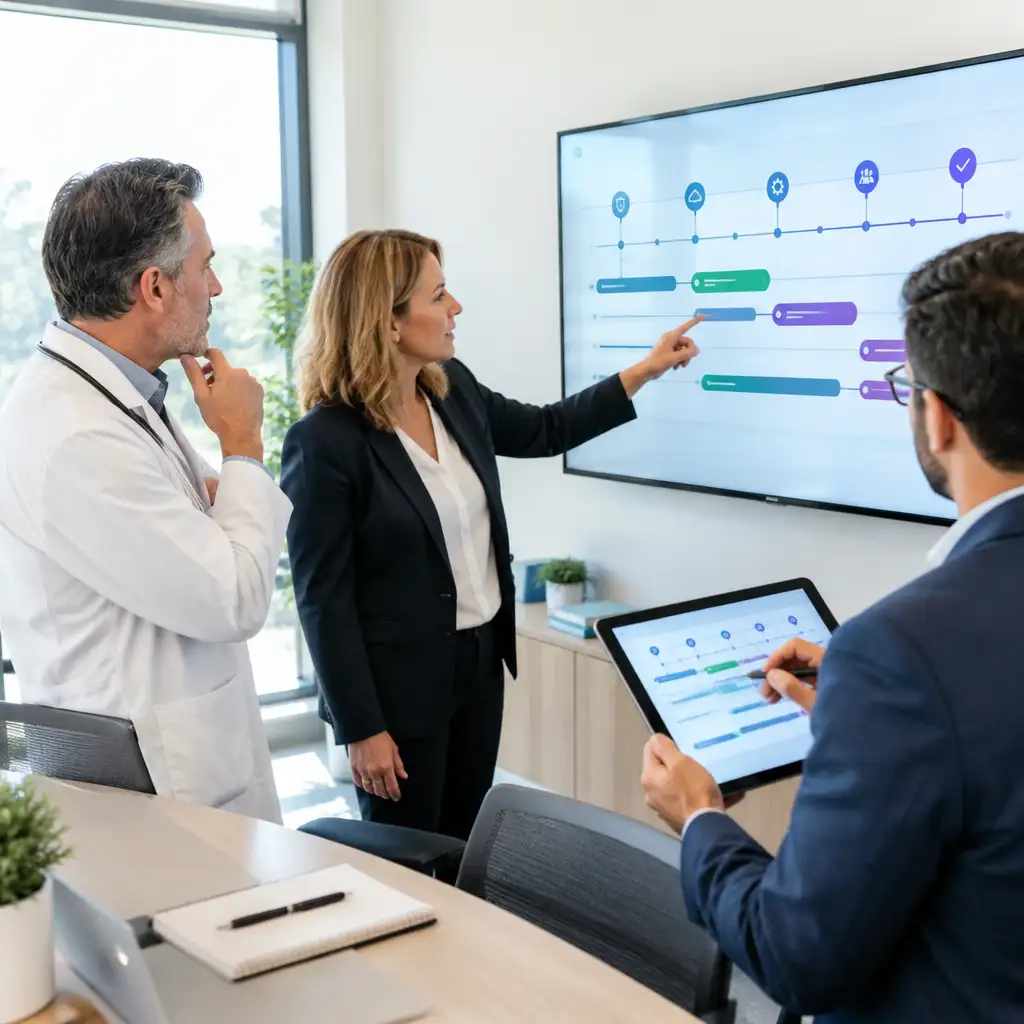
Acquiring a medical practice brings immediate operational opportunities—and significant technology responsibilities. Physician owners must ensure that EHR access, patient scheduling, and clinical documentation remain reliable on day one while also protecting sensitive patient information. Technology decisions made during the acquisition directly affect continuity of care, regulatory risk, and clinician productivity.
A Virtual CIO can provide strategic leadership to align vendors, remediate compliance gaps, and oversee data migrations. But not every Virtual CIO understands the unique intersection of clinical workflows, HIPAA requirements, and the critical uptime expectations of a healthcare organization. Asking the right questions up front helps physician owners reduce risk and maintain patient-facing operations.
This checklist-style guide lists the critical questions physician owners should ask a virtual CIO for healthcare when planning vendor consolidation, compliance remediation, data migration, and continuity planning during acquisitions. Use it as a decision-support tool to protect PHI, preserve EHR availability, and keep clinical teams focused on patient care.
Assessing vendor consolidation and interoperability risks
Question: Which vendors should be consolidated or retained, and how will consolidation affect clinical workflows and PHI flows?
Why it matters: Vendor consolidation can reduce management overhead and licensing costs, but improper consolidation risks breaking EHR integrations, disrupting lab interfaces, or creating new PHI exposure pathways. A Virtual CIO for healthcare should map every vendor touchpoint to clinical processes—scheduling, lab results, e-prescribing, billing—and show how consolidation will preserve or improve those workflows.
Checklist items to ask the Virtual CIO:
- Can you provide a vendor inventory that includes business associate agreements (BAAs), data exchange methods, and clinical touchpoints?
- Which integrations are critical to same-day operations (patient check-in, medication reconciliation, lab results) and cannot tolerate downtime?
- What is the interoperability verification plan for each vendor transition to ensure EHR and device connectivity?
- How will vendor consolidation affect network segmentation and PHI access controls?
Operational impact: Proper vendor assessment protects clinical connectivity and reduces the likelihood of interrupted care. Virtual CIO guidance should align vendor decisions with patient scheduling, provider productivity, and continuity-of-care requirements.
For strategic leadership on this topic, physician owners often engage a virtual CIO for healthcare to produce a prioritized vendor roadmap and integration matrix.
Compliance remediation and HIPAA readiness checklist
Question: What immediate HIPAA gaps exist in the acquired practice, and what remediation timeline do you recommend?
Why it matters: Acquisitions often reveal inconsistent policies, missing BAAs, weak configurations, and unpatched systems. Each gap increases compliance risk and the chance of PHI exposure. The Virtual CIO should provide a risk-based remediation plan tied to regulatory priorities and clinical impact.
Key questions and deliverables to request:
- Can you perform or commission a targeted HIPAA gap assessment and deliver prioritized remediation tasks with estimated effort?
- Which systems require immediate patching, encryption, or reconfiguration to meet HIPAA standards?
- Do BAAs exist for every vendor handling PHI, and are they contractually sufficient for the combined organization?
- What administrative controls—policies, role-based access, training—must change to reflect merged operations?
- How will you coordinate remediation with clinical leaders to minimize workflow disruption?
Operational impact: Remediation prioritised by clinical risk ensures PHI protection and reduces regulatory exposure without sacrificing EHR availability. The Virtual CIO should balance compliance with operational continuity and involve practice managers in scheduling remediation windows.
Data migration and PHI protection during acquisition
Question: How will PHI be migrated, validated, and protected during transfer between systems, including EHR, EPM, and third-party services?
Why it matters: Data migrations are technical and clinical operations. Improper transfers can corrupt records, break documentation continuity, or expose PHI in transit. The Virtual CIO needs a migration playbook that preserves data integrity and ensures clinicians maintain access to records critical for patient care.
Migration checklist for the Virtual CIO:
- Detailed migration scope: which patient records, billing data, and documents move, and which remain in legacy archives.
- Encryption and secure transfer methods for PHI in transit and at rest.
- Data validation plan: reconciliation steps, sample audits, and clinician sign-off for migrated patient charts.
- Rollback and contingency plans if data integrity issues arise.
- Testing schedules aligned to low-impact clinical windows and a communications plan for end users.
Operational impact: A controlled data migration maintains clinical documentation continuity, avoids scheduling and billing disruption, and protects PHI. If cloud transition or EHR migration is required, the Virtual CIO should align with cloud migration for healthcare best practices to reduce downtime and risk.
EHR availability and continuity of care planning
Question: What is your plan to guarantee EHR uptime, remote access, and clinical system availability during and after the acquisition?
Why it matters: EHR outages directly affect patient scheduling, medication orders, documentation, and provider productivity. The Virtual CIO must provide technical and operational continuity plans that prioritize clinical systems and define recovery objectives.
Essential items to confirm:
- Recovery Time Objectives (RTOs) and Recovery Point Objectives (RPOs) for EHR and key clinical systems.
- Failover strategies: local redundancy, cloud failover, and tested disaster recovery steps aligned to healthcare backup and disaster recovery outcomes.
- Support model for clinicians: how will the healthcare IT help desk handle surge support, logins, and immediate EHR access issues?
- Training and communication plans so clinicians know temporary workarounds that preserve patient safety during any interruption.
Operational impact: Clear uptime objectives and tested recovery procedures keep clinics operational and protect patient care workflows. Coordinate the recovery planning with your healthcare IT help desk to ensure rapid clinical support during cutovers and incidents.
Budgeting, timelines, and resource planning for integrations
Question: What are realistic timeline estimates, resource requirements, and budget ranges for vendor consolidation, compliance remediation, and data migration?
Why it matters: Physician owners must balance acquisition costs with the ongoing need to invest in secure, compliant technology. A Virtual CIO provides cost estimates, phased implementation plans, and staffing needs that align with clinical priorities and cash flow realities.
Ask the Virtual CIO to provide:
- A phased timeline with milestones for critical items (BAA reviews, patching, migration dry runs, go-live windows).
- Estimated internal and external resource needs, including clinical time required for validation and training.
- Line-item budget ranges for vendor consolidation, cloud migration, backup improvements, and security tooling.
- Risk-adjusted contingency budget and an explanation of costs that preserve continuity of care versus optional enhancements.
- Recommendations for measurable success criteria tied to operational outcomes (reduced downtime, audit readiness, faster access to charts).
Operational impact: Transparent budgeting tied to timeline milestones enables physician owners to fund essential compliance work without compromising patient services. A Virtual CIO should help prioritize investments that yield immediate compliance and continuity benefits.
For help structuring large-scale integration projects and practice growth, consider engaging healthcare technology consulting to support planning and execution.
Post-acquisition monitoring, testing, and governance
Question: How will you monitor systems, test controls, and govern ongoing compliance after the acquisition closes?
Why it matters: Merged practices often drift back into risky configurations without continued governance. The Virtual CIO should define an operational monitoring program, scheduled audits, and governance responsibilities to keep PHI safe and systems reliable.
Key governance items to request:
- Continuous monitoring approach for critical systems: patch status, access logs, and unusual activity alerts.
- Regular validation tests: backup restores, EHR failover drills, and integration smoke tests scheduled with clinical leaders.
- Documentation and retention of compliance evidence for audits and breach investigations, with defined escalation paths.
- Ongoing vendor management: BAA reviews, security questionnaires, and periodic reassessments of third-party risk.
- Board- or executive-level reporting cadence that ties IT metrics to patient care outcomes and operational KPIs.
Operational impact: Sustained monitoring and governance preserve HIPAA compliance and system reliability, protecting patient care and reducing the chance of disruptive incidents. For incident investigation needs, the Virtual CIO should coordinate with specialized cyber forensics for healthcare when required.
Frequently Asked Questions
Q: How long does a typical acquisition integration take when moving EHR and billing systems?
A: Timelines vary by scope. Simple onboarding and BAA consolidation can be weeks; full EHR or EPM migrations typically require 3–9 months including planning, dry runs, clinician validation, and go-live support. The Virtual CIO should provide a phased timeline with measurable milestones tied to continuity of care.
Q: What budget should physician owners expect to allocate for compliance remediation and secure migrations?
A: Budgets depend on system complexity and remediation severity. Expect predictable line items for security tooling, migration services, third-party BAAs, and contingency funds. A Virtual CIO will produce a prioritized budget that connects each expense to operational outcomes such as reduced downtime and improved audit readiness.
Q: How can we verify that PHI was migrated correctly and remains protected after cutover?
A: Require data reconciliation procedures, clinician sign-offs on migrated charts, encrypted transfers, and post-migration audits. The Virtual CIO should schedule validation sampling, run integrity checks, and ensure logging is in place to demonstrate PHI protection and continuity of clinical care.
Pulling it together: physician owners should use this checklist to evaluate a Virtual CIO’s practical experience with healthcare integrations, HIPAA compliance, PHI protection, and EHR continuity. The right virtual CIO for healthcare will deliver not just technical plans, but governance, timelines, and budgets that keep patient care uninterrupted and compliant.
Healthcare organizations need technology leadership that understands compliance, budgeting, vendors, security, and clinical growth. VitalEdge IT provides Virtual CIO services designed specifically for healthcare environments. Call 855-367-8348 or email in**@*********it.com to discuss your IT strategy.