
When a physician suspects protected health information (PHI) exposure in a multi-provider clinic, the immediate priority is preserving patient safety and maintaining continuity of care. Even when the exposure appears limited, the downstream effects on EHR accessibility, clinical documentation, and scheduling can be significant—interrupting visits, delaying treatment orders, and creating audit and reporting obligations under HIPAA. Leaders must respond with clinical continuity in mind while engaging technical and compliance resources.
This article lays out practical, step-by-step actions clinicians and practice leaders should take the moment a PHI exposure is suspected, explains how endpoint protection reduces the chance of recurrence, and describes how specialized IT security services integrate into clinical workflows so care continues with minimal disruption. The guidance is written for physicians, practice administrators, compliance officers, and multi-site leaders who must balance patient care obligations with regulatory responsibilities.
Actionable steps—triage, containment, documentation, and coordinated recovery—are presented with a focus on EHR access, clinical documentation continuity, and HIPAA breach reporting requirements. You will also find guidance on what to expect from healthcare-focused IT Security Services, and how endpoint protection and workstation management protect PHI while supporting everyday clinical operations.
First Responses and Clinical Triage After Suspected PHI Exposure
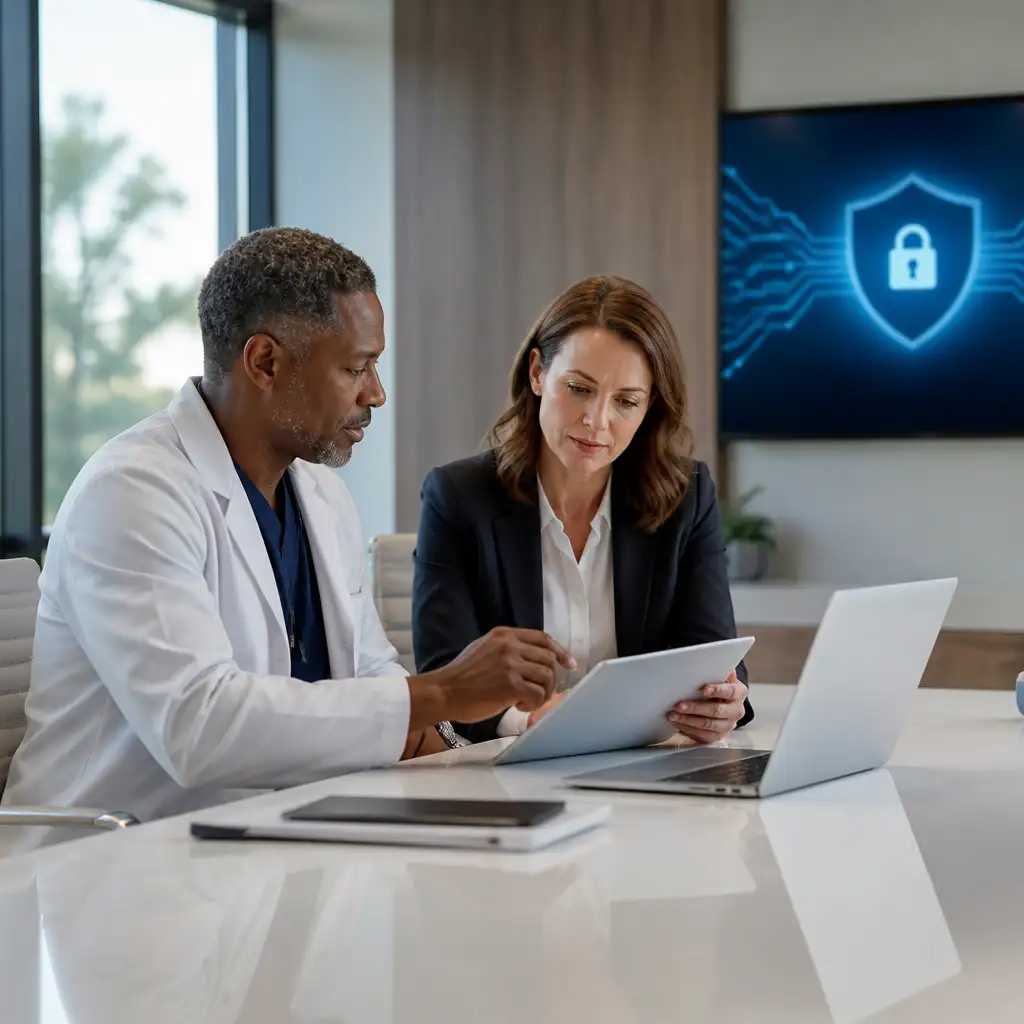
The clinical team must make patient-care decisions first. If EHR access is unaffected, continue urgent care and document actions. If the exposure affects system access or integrity, identify immediate clinical risks: cancelled procedures, delayed test orders, medication access, or disrupted scheduling. Assign a clinical lead (senior physician or nurse manager) to coordinate patient-care continuity while technical teams perform triage.
Steps for clinical triage:
- Assess which patient-facing systems are affected (EHR, e-prescribing, lab interfaces).
- Prioritize active patients—those receiving time-sensitive interventions or recent test results requiring follow-up.
- Implement temporary manual workflows where safe: printed medication lists, paper charting with secure storage, and controlled re-entry into the EHR once systems are verified.
Communication with staff and patients should be clear but measured. Avoid speculative statements about root cause until a technical review is complete. While clinical teams manage care, immediately notify your IT security contact or vendor. If you do not have an on-call security partner, consider engaging healthcare-focused resources that understand HIPAA and clinical priorities—specialists in healthcare cybersecurity can act quickly to contain exposure without jeopardizing care.
Immediate Technical Containment for Endpoints and EHR Access
Containment actions must preserve evidence and maintain EHR availability where possible. Technical steps typically include isolating affected endpoints, changing compromised credentials, and temporarily segmenting network access for suspect devices. Avoid powering off or wiping devices unless instructed by a forensic expert to preserve logs and artifacts for investigation.
Recommended containment checklist for clinicians and office managers:
- Disable or reimage only the specific workstation or account linked to the suspected exposure; do not broadly disconnect clinical systems that support patient care unless required.
- Reset credentials for affected user accounts, enforce multi-factor authentication, and review recent login activity for anomalies.
- If PHI was transmitted externally (email, USB, cloud share), document the recipients, timestamps, and file names. Preserve original messages and attachments for investigation.
Work with your healthcare IT support or outsourced provider to perform these containment tasks safely. A healthcare-aware help desk can apply the right controls without disrupting clinical workflows; consider trusted medical IT support to restore safe EHR access quickly while preserving the chain of custody for investigation.
Documenting the Incident and HIPAA Notification Obligations
Documentation is both a clinical and compliance imperative. Record the timeline: who observed the potential exposure, when it occurred, what PHI elements may have been involved, and immediate containment steps taken. Documentation supports patient safety decisions and establishes the evidence needed for HIPAA breach analysis and potential reporting.
Key documentation items:
- Incident timeline with timestamps and involved personnel.
- Systems affected and specific PHI types (names, dates of birth, medical records, billing data).
- Patient impact assessment: number of records affected and clinical continuity implications.
- Actions taken: containment, credential resets, notifications to patients or regulators.
HIPAA requires covered entities to perform a risk assessment to determine whether the breach requires notification to affected individuals, HHS OCR, and, in some cases, the media. Work with compliance leadership and a healthcare-focused security partner to complete this analysis promptly and to prepare any required notifications with accurate clinical context.
How Endpoint Protection Reduces Recurrence and Protects PHI
Endpoint protection is a foundational control for preventing repeated PHI exposures. Modern endpoint solutions combine anti-malware, behavioral detection, application control, and managed patching to reduce vulnerabilities on physician workstations, nurses’ stations, and administrative terminals that access the EHR.
Benefits of enterprise-grade endpoint protection for multi-provider clinics:
- Blocking credential theft and file exfiltration attempts that often underlie PHI exposures.
- Rapid detection of suspicious processes or scripts that could access patient data.
- Automated patching and configuration baselines to reduce exploit windows on clinical workstations.
Endpoint protection must be paired with sound workstation management. A formal approach to server and workstation management ensures systems remain patched, configured securely, and monitored for deviations—limiting the opportunities for exposures while supporting reliable EHR access and clinical workflows.
Integrating IT Security Services with Clinical Workflows to Maintain Care
Healthcare cybersecurity cannot be implemented in isolation. IT security services for healthcare should be designed to understand and preserve clinical workflows. That requires pre-established playbooks that prioritize EHR availability, designated clinical escalation points, and service-level expectations for response times during incidents.
How specialized IT Security Services integrate effectively:
- Pre-incident planning: practice-specific incident response playbooks that map clinical roles and decision points to technical actions.
- Real-time coordination: a security team that works directly with practice administrators and the EHR vendor to restore access while validating system integrity.
- Clinical-aware remediation: technicians and security analysts trained to apply fixes without unnecessary downtime, for example phasing workstation remediation after-hours or using shadowed devices for uninterrupted documentation.
Engaging a healthcare cybersecurity partner ensures containment and recovery actions respect patient schedules and clinical priorities. If you need an external evaluation of your posture or immediate help, request a free healthcare IT risk assessment or contact VitalEdge IT to discuss an incident and tailored response options.
Restoring Normal Operations and Post-Incident Improvements
Restoration must balance speed with assurance. Before returning remediated devices and accounts to routine use, validate that EHR access is secure, logs no longer show anomalous activity, and clinical staff can perform documentation without workarounds that reintroduce risk.
Steps to restore and strengthen operations:
- Complete forensic review if exposure involved potential external transmission; document findings for HIPAA reporting and future prevention.
- Reinstate users with refreshed credentials and verify multi-factor authentication is enforced across clinical systems.
- Provide staff with a concise after-action briefing and targeted training on any discovered workflow gaps (secure file handling, email hygiene, removable media policies).
- Implement technical improvements: advanced endpoint protection, centralized patching, stricter access controls, and network segmentation that reduces lateral movement risk.
Post-incident improvements should be prioritized by clinical impact. For example, scheduling and e-prescribing continuity are high priority—any security changes that slow these functions should be redesigned or phased with clinical input to avoid unintended harm to patient care.
Frequently Asked Questions
Q: What immediate steps should a physician take if they suspect PHI was emailed to the wrong recipient?
A: Immediately notify your practice compliance lead and IT security contact, preserve the sent message and any attachments, and document the recipient and PHI involved. Work with your security team to assess whether the recipient is likely to retain the data and to determine notification obligations under HIPAA.
Q: Will isolating an infected workstation disrupt access to the EHR for the clinic?
A: Not necessarily. Targeted isolation of a single endpoint is the preferred containment approach so that EHR servers, vendor-hosted EHR services, and other clinical workstations remain available. Coordinate with your IT security partner to isolate only affected devices and to preserve access for ongoing patient care.
Q: How does endpoint protection coexist with clinician productivity and usability?
A: Modern endpoint protection is designed to be minimally intrusive while providing robust PHI protection. When implemented with clinician input and proper configuration, it runs in the background, enforces secure baselines, and reduces incidents that would otherwise interrupt workflows. Partnering with a healthcare-focused IT provider ensures security aligns with clinical priorities.
Healthcare cybersecurity requires more than generic IT protection. VitalEdge IT helps medical practices protect PHI, reduce HIPAA risk, and strengthen security across clinical systems. Call 855-367-8348 or email in**@*********it.com for guidance.